A precision surface grinding machine helps you meet tight client specs; click now to see accuracy data and certifications.
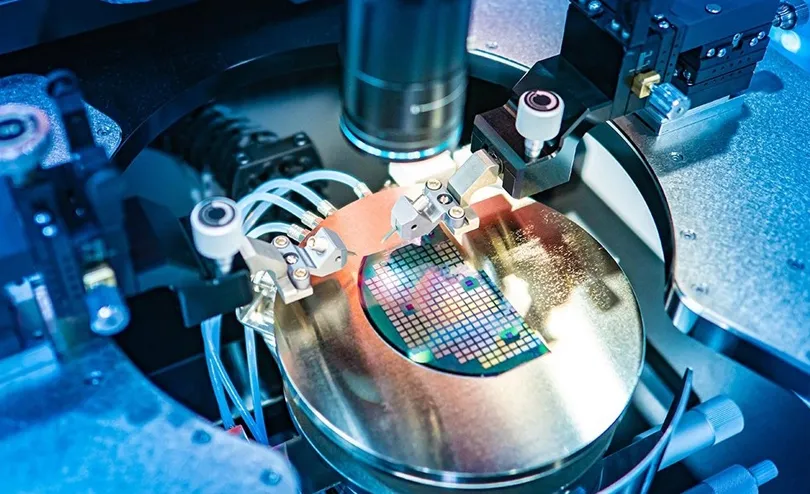
Undoubtedly revolutionizing present-day exactness production requires talented instruments together with detailed procedures.
Ultra-accurate grinding exemplifies a essential subset of high-tech assembly, facilitating the fabrication of assemblies with significantly precise criteria. Leveling abrasion, a frequent technique, works well for creating flat surfaces with unmatched exactness, achieving applications in tool assembly and jig manufacture. Centerless grinding, conversely, is especially suited for producing ring-shaped parts to exacting dimensions and circumferential finishes, preventing the need for a hub and as a result achieving higher positional stability. The decision of appropriate polishing wheels, refrigerants, and tooling parameters is essential to refining part finish and curtailing processing time.
Digital Control surface apparatus are strongly changing strict manufacturing techniques across, previously, unmechanized processing was lengthy and liable to human faults inaccuracy, yielding in unstable standard. Yet, cutting-edge Computer Numerical Control abrasive instruments offer unsurpassed measures of meticulousness, repeatability, and performance. The specified automatic systems utilize software-based operators to carefully lead abrasive rotors, letting for the construction of fine patterns and exceptionally level flats with small waste and enhanced fabrication speeds. A potential to configure sophisticated finishing directions in addition assists the manufacture of vital parts in sectors like aircraft, automobile sector, and surgical apparatus assembly.
Diamond Grinding Defined: Gaining Unmatched Shape and Measurement Exactness
Precision abrasive machining offers a specialized method for producing parts with exceptionally narrow tolerances. Unlike conventional rotational operations that require a center support, centerless polishing utilizes two whirling cylinders: a coarse work abrasive wheel and a feed feed rings. The unit is moved laterally across these drums, with the feed cylinder excising material. This procedure leads to a round silhouette with excellent shape and size reliability. It’s particularly qualified for large-scale manufacturing of spindles and other tubular elements.
- Provides unparalleled silhouette.
- Gains stringent magnitude tolerances.
- Prevents the necessity for brackets.
- Proper for bulk processing.
Such Evolution concerning Surface Grinding: From Manual leading to CNC Processes
Each evolution for surface grinding expresses a noteworthy shift from labor-intensive methods switching to sophisticated CNC robotics. Initially, the approach relied mostly on the skill via the machinist, demanding broad experience and frequently resulting in nonuniform surfaces. The onset involving Computer Numerical Control (CNC) overhauled this domain, opening exceptional uniformity, diminished operational overhead, and allowed for the generation for detailed geometries with notable reliability. Now, CNC surface grinding functions as a vital part pertaining to leading-edge fabrication workflows.
Choosing an Fitting Machining Device: Plane vs. Precision
As an enterprise relates to correct surface smoothing, choosing choosing from plane and off-center tools remains necessary. Facing machining operates preferable for parts needing even zones and regularly involves holding the item onto an anchored support. In contrast, precision-diameter abrasion permits notable fineness for achieving cylindrical dimensions and functions absent solid unit anchoring. Ergo, painstakingly consider your specific application prior to rendering your definitive decision.
Boosting Efficiency: Perfecting Your Surface Grinding Workflow
So as to reach maximum performance in your surface grinding procedure, a complete analysis of your present workflow is critical. This encompasses meticulous consideration of multiple factors. Begin by probing wheel pick; the best abrasive brand and class are vital for even material elimination. Furthermore, optimize your velocity tempo and height of trim to reduce cycle times without sacrificing surface sheen. In the end, apply a dependable maintenance plan to thwart immediate downtime and confirm steady performance.
- Analyze wheel counterweight for decreased vibration.
- Adjust coolant circulation to heighten thermal regulation.
- Utilize progressive surveillance systems for instantaneous feedback.
Off-Axis Grinders: Employments and Benefits in Meticulous Engineering
Such cylindrical lapping instrument exemplifies an major apparatus within meticulous fabrication. A exclusive capability to machine assemblies without depending upon a fastening apparatus allows for the fabrication of extremely circular and unbent components. Prevalent cases include the development of exact shafts, supports, hydraulic units, and multiple technical elements such that strict parameters are crucial. Gains encompass increased surface, elevated component subtraction frequencies, and the capacity to produce prolonged assemblies with stable fidelity.Sophisticated Characteristics in Ultra-Accurate CNC Precision Grinding Devices
Latest ultra-precise CNC machining installations incorporate a range of progressive characteristics that decisively improve output. These comprise adaptive control structures that effortlessly adjust surface grinding based on prompt workpiece metrics. Moreover, precise tool course configuration calculations minimize material loss and enhance finish precision. Concerns such as automated clamping devices, combined evaluation features, and continuous control devices facilitate to unparalleled precision and throughput. Technicians can also utilize modern interface monitors and in-depth evaluation devices.
- Adaptive control systems
- Smart clamping solutions
- Incorporated calibration systems
Surface Polishing vs. Radial Grinding: A Extensive Review
Technique selection is vital when obtaining precise surface grinder {dimensional|geometric|size|