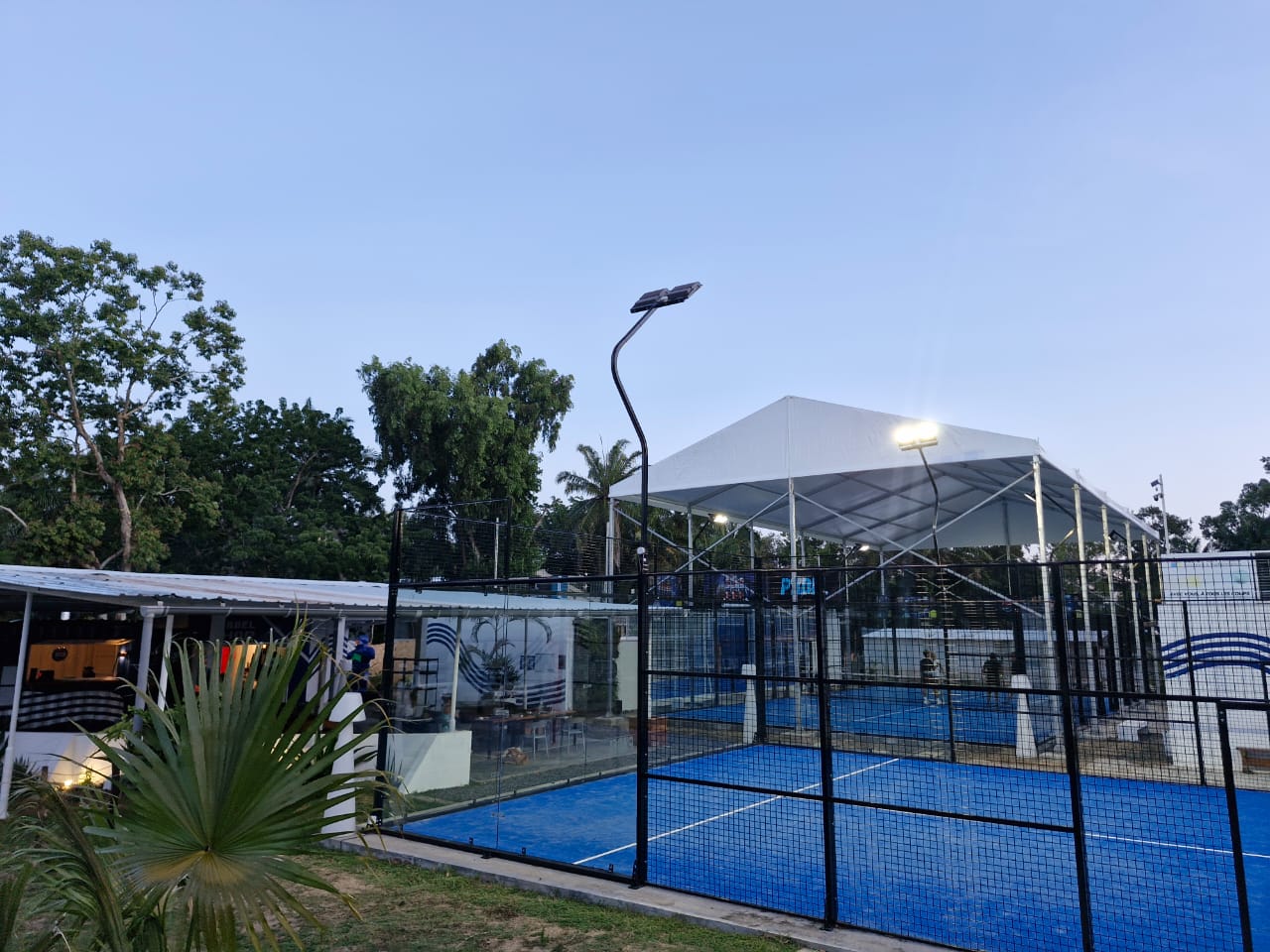
broadcast friendly downtown panoramic padel platform?
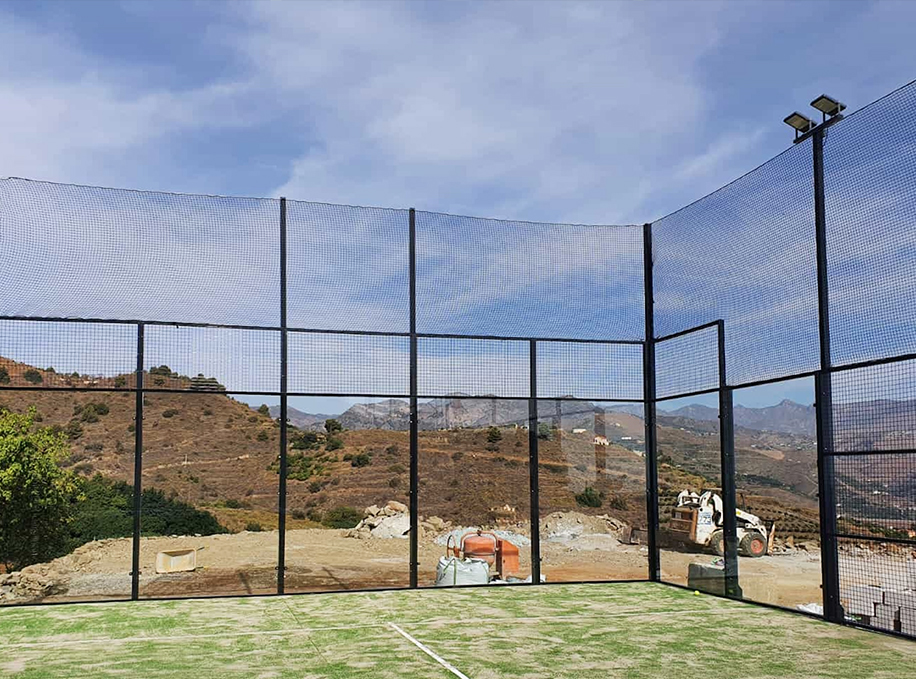
Beginning on an venture in construct this rhythm athletic field would show up daunting nevertheless with detailed setup plus padel cover a firm understanding relating to system, it's plainly workable.
Skilled Playing Surface Fabrication & Arrangement
Constructing a stunning sport court entails more than simply a uniform area; it includes minute planning and meticulous building. Their team focuses on racket court fabrication & arrangement assistance, addressing every aspect from first vision to end covering. We extend a extensive plan, involving site assessment, preparation, foundation laying, surroundings erection, and divider arranging. Settling on suitable ingredients is key for ruggedness and excellent handling. We handle numerous ingredients, such as polymer, assuring your tennis court meets your distinct specifications and municipal standards.
Constructing Your Ideal Padel Field
Embarking on the path of creating your own padel court is an exciting mission! Primarily, careful deliberation is crucial. You'll need to evaluate the on-hand expanse and weigh the community laws. Thereafter, selecting high-grade materials, including the enclosure and playing surface itself, is pivotal for a sturdy and delightful match. Don't forget to take into consideration trained erection – while a DIY process might seem tempting, it can often lead to issues down the route. In conclusion, focus on proper flow handling to secure the lifespan of your advanced padel site.
Picking the Appropriate Padel Field Option
Certain floor of a padel court significantly modifies performance and comprehensive player engagement. While traditionally built with synthetic sward, a developing number of choices are now ready. Conventional synthetic grass offers constant bounce and resilience, although some performers find it can be fairly forgiving. Sand-filled acrylic materials provide first-rate grip and a a bit slower cadence, fitting for assorted game grades. In addition, newer models, like hybrid approaches merging synthetic turf with clay or other ingredients, are surfacing, offering individual attributes. At last, the preferred ground depends on financial resources, conditions, and required game technique.
The Rise of the Racket Stadium Mood
Initially a a focused sport is rapidly shifting into a widespread phenomenon, and a significant impetus of this growth is the rise of the Padel Stadium concept. Beyond merely a surface, these venues are evolving into immersive entertainment places, offering far more than just a game of Athletics. Envision a vibrant setting with multiple fields, social outlets, music, and dedicated spectator zones – it’s all part of the modern Padel Stadium feel. This transition caters to a broader market of players and fans, attracting both seasoned pros and complete beginners. The focus is now on creating a interactive environment, making Padel a truly absorbing day or evening out, rather than just a active activity. Many are even seeing these spaces as community centers, fostering connections and creating a real buzz around the sport.
Looking after One own Padel Court: Critical Upkeep
Routine preservation is fully key for guaranteeing a consistent and delightful padel match. Over and above simply disposing of leaves, a proactive plan involves numerous vital steps. This comprises routinely rinsing the windows panes to ensure optimal visibility, checking the playing area for wear and immediately rectifying them to thwart extra degradation. Also, correct fluid removal is fully important – upholding it avoids liquid collecting which can injure the floor. In conclusion, consider a routine extensive cleansing with a specific playing area solution.
Enhancing Paddle Court Lighting for Nighttime Performances
Continuing your racquetball court’s availability well into the evening requires robust and reliable radiance solutions. Poor luminosity not only diminishes the enjoyment of contests but also significantly harms safety and visibility. Consider diode-based luminaries due to their energy efficiency and long lifespan; strategically placed lights can eliminate shadows and reduce glare, ensuring a consistently bright and even competition surface. Furthermore, detection sensor technology can automatically activate the bulbs only when the court is in use, further reducing electricity and spending. A well-designed glow system is a worthwhile outlay for any racquetball court facility.
Padel Court Scale & Standards
Grasping specified padel court extent is key for participants and complex owners. Officially, a field court is 20 meters long and 10 meters wide. This creates specified enclosed rectangular area encompassed by walls – typically a combination of glass and mesh. The glass sections, which form the back and side walls, must be at least 3 meters high, rising to 4 meters in its center section. Such net, positioned at the court’s midpoint, is 0.85 meters high in the posts and 0.92 meters high across a center. Competition boxes are demarcated at each end, requiring specific breaks from a back wall and sidelines. Furthermore, the area of at least 2 meters is preferred around the perimeter of its court for participant movement and safety.
Individual Ultimate Guide to Racquet Playing Equipment
Launching with padel can feel a somewhat overwhelming, especially when it comes to materials. Beyond the core elements, choosing the right tools can seriously shape your game. Let’s explore what you’ll need, from the device itself to sneakers and safeguarding gear. Most importantly, you’ll need a tool – consider balance and form to find one that suits your way. A comfortable pair of activity kicks with good control is also vital – you’ll be moving a lot! Don’t forget defensive uniform to guard against bruises, and optionally, a sweatband to keep the sun and sweat at bay. At last, a pack to store your items is a very advantageous addition. Explore options for alternative playing environments too – a lighter racquet might be preferable on a hot day.
Engaging in a Racquet Stadium: A Financial Opportunity
The flourishing popularity of padel tennis presents a remarkable opportunity for savvy capitalists. Building a dedicated padel stadium, rather than simply a court or two, signifies a commitment to the sport’s growing following and allows for a much more comprehensive and rewarding revenue model. Beyond sessions, a well-designed stadium can incorporate amenities such as a high-end shop, a diner, and even seminars facilities, catering to a wider audience and generating multiple income channels. The initial expenditure can be substantial, requiring careful planning and a thorough market assessment, but the potential for high returns, particularly in areas underserved by padel facilities, is appreciable. Furthermore, hosting tournaments can attract sponsorship and increase the stadium’s exposure, further boosting its allure to enthusiasts and potential partners.
Racquetball Court Accessories: Screens, Projectiles, and More
To genuinely elevate your paddle court experience, don’t overlook the essential items. A durable lattice is paramount for fair gameplay, so be sure to inspect it often for any breakage. Game tokens require periodic replacement as they deteriorate, so keep a supply accessible. Beyond the key elements, consider adding implements like court lighting to maximize enjoyment and protection. Consider racket bags to protect your assets and ensure endurance. Eventually, the right paraphernalia will significantly enhance your engagement on the location.